


Almost every therapist eventually asks the same question: which therapist directories are actually worth paying for?
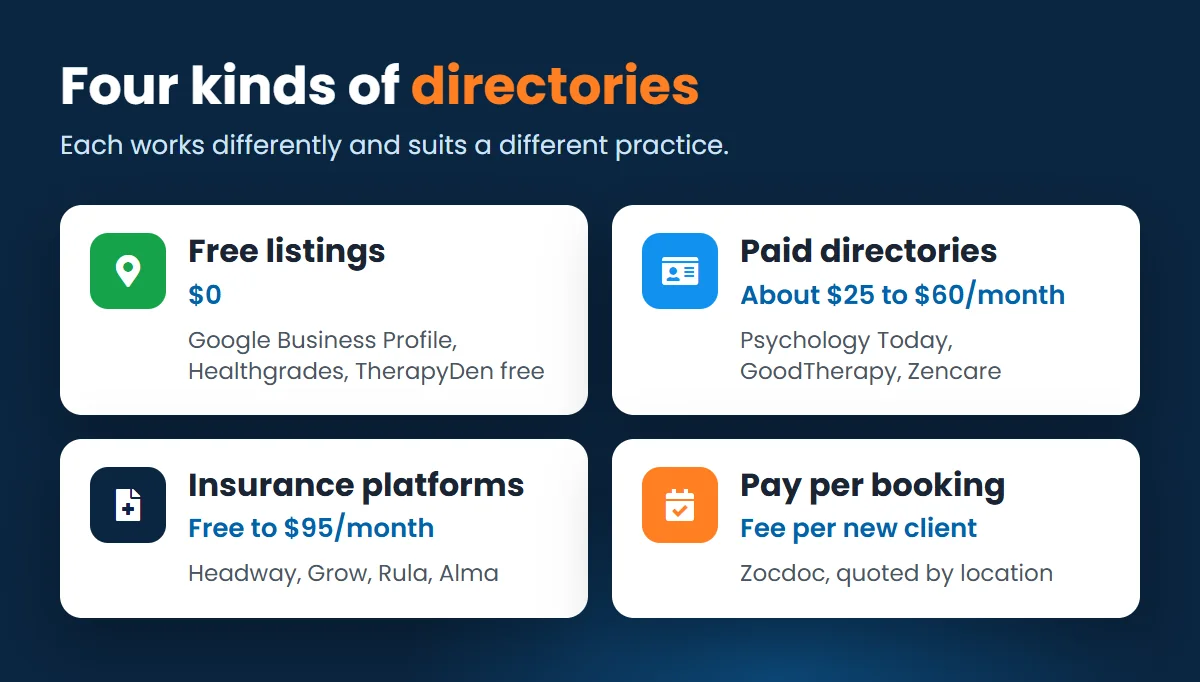
There are dozens of them. Some are free, some cost $25 to $60 a month, some only list therapists who take insurance, and a few charge you every time a new client books. Most directory comparisons simply list them. This guide also explains what each one is good for, what it costs in 2026, and how to tell whether a listing is bringing you clients or quietly draining your budget.
Prices last checked: November 2026, using each directory’s own pricing page where available and recent independent reviews where it was not. Directory pricing changes often, so confirm the current rate before you sign up.
The Short Answer
If you only want the recommendation:
- Most private practices: Psychology Today, plus a free TherapyDen profile and a properly set-up Google Business Profile.
- Therapists who serve a specific community: add the identity-focused directory that matches your clients, such as Inclusive Therapists or Therapy for Black Girls.
- Specialists (EMDR, Gottman, couples, perinatal, OCD): your professional association’s referral directory often brings better-matched clients than any general directory.
- Insurance-based practices: consider an insurance platform such as Headway, Alma, Grow, or Rula, which handle credentialing and send insurance-paying clients your way.
- Everyone: track where clients come from, and cancel any paid listing that has not produced a client in six months.
Directories work best as one source of clients, not the only one. More on that at the end.
Therapist Directory Costs at a Glance
| Directory | Cost for therapists | Best for |
|---|---|---|
| Psychology Today | $29.95/month | Almost every private practice |
| GoodTherapy | $30.95, $40.95, or $49.95/month | Therapists who also want CE credits |
| TherapyDen | Free profile, or $30/month to appear in search | An inexpensive second listing |
| Zencare | From $59/month ($69 in NY and CA) plus a one-time setup fee | Polished, vetted profiles in larger cities |
| Psychology.com | $49/month or $490/year after a 30-day trial | Testing a newer alternative |
| Mental Health Match | Free trial, then a monthly or annual fee | Clients who prefer a matching quiz |
| Inclusive Therapists | $29/month, or $22/month billed annually (90-day free trial) | Therapists of color and LGBTQIA+ affirming care |
| Therapy for Black Girls | $25/month or $300/year | Therapists serving Black women |
| Open Path Collective | No listing fee; you offer reduced-fee sessions | Filling open slots with sliding-scale clients |
| Gottman Referral Network | $30 to $50/month, depending on training level | Gottman-trained couples therapists |
| Alma | $95/month | Insurance credentialing plus a directory |
| Headway, Grow Therapy, Rula | Free to join (insurance platforms) | Insurance-based practices |
| SimplePractice Therapy Finder | Included with a SimplePractice plan | Practices already using SimplePractice |
| Zocdoc | Per-booking fees, quoted by specialty and location | Insurance practices in competitive cities |
| Google Business Profile, Healthgrades, Bing Places, Apple Business | Free | Local visibility for practices with an office |
What a Directory Can and Cannot Do for Your Practice
A directory gives you a profile on a website that already receives a lot of traffic from people looking for a therapist. That is the whole value: you borrow someone else’s visibility.
That has real benefits:
- People searching on Google for “anxiety therapist in [city]” often see directory pages near the top.
- A new practice can start receiving inquiries before its own website ranks.
- Filters for insurance, specialty, language, and identity help well-matched clients find you.
- Consistent listings support your local presence across the web.
It also has limits:
- You rent the visibility. When you stop paying, the profile disappears, and so do the inquiries.
- You compete on the same page with every other therapist in your area, often sorted by an algorithm you cannot see.
- Clients compare quickly. Your profile has a few seconds to stand out among dozens of similar ones.
- The directory owns the relationship with the searcher, not you.
That is why directories work best alongside a website and local search presence you own. We explain that balance in how counselors can get more clients without relying on directories.
The Major General Directories
Psychology Today
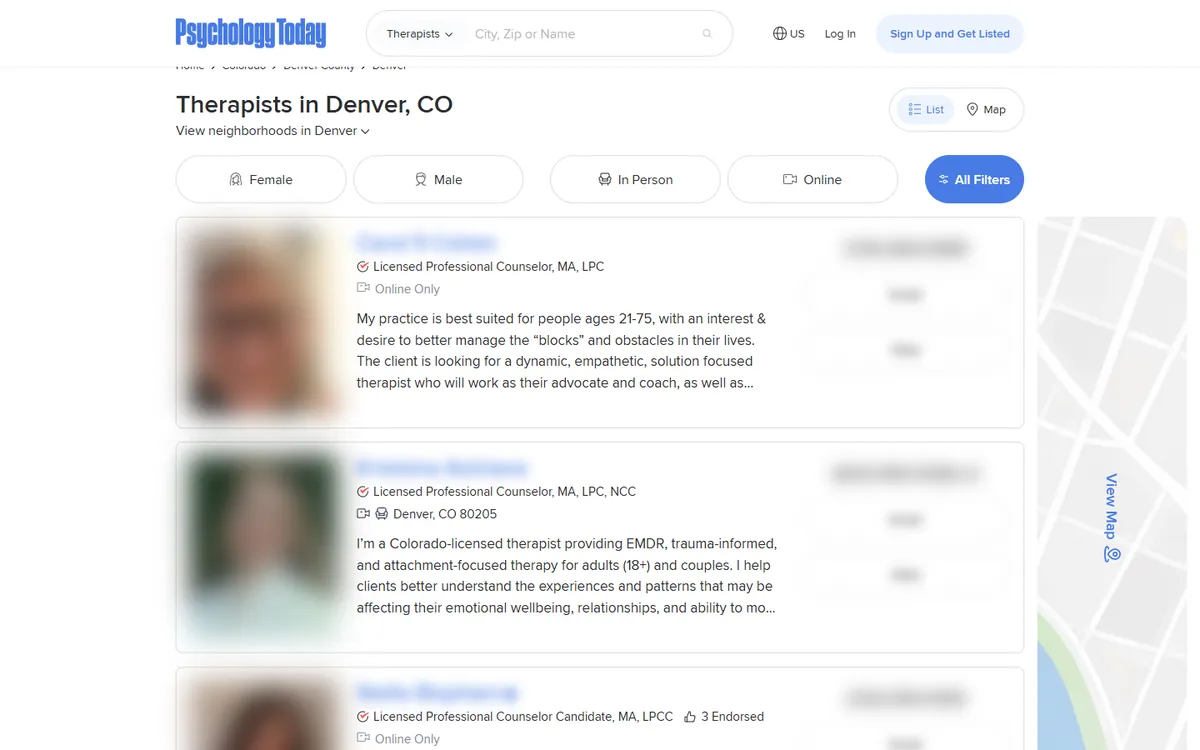
Cost: $29.95/month. You can earn a free month by referring a colleague who joins.
Psychology Today is still the default directory for therapy seekers in the US, and its city and specialty pages rank for an enormous number of searches. For most practices, it remains the one paid listing worth keeping, provided the profile is written well.
The downside is competition. In larger cities, a single search page can show hundreds of therapists, so a generic profile rarely gets noticed.
One thing to check in 2026: some insurance platforms now create or manage Psychology Today profiles for the therapists on their networks. Grow Therapy, for example, introduced opt-in, Grow-managed profiles in June 2026 that use Grow’s contact details. Search for your own name on Psychology Today occasionally, and make sure every profile under your name is one you control and sends inquiries where you want them.
GoodTherapy
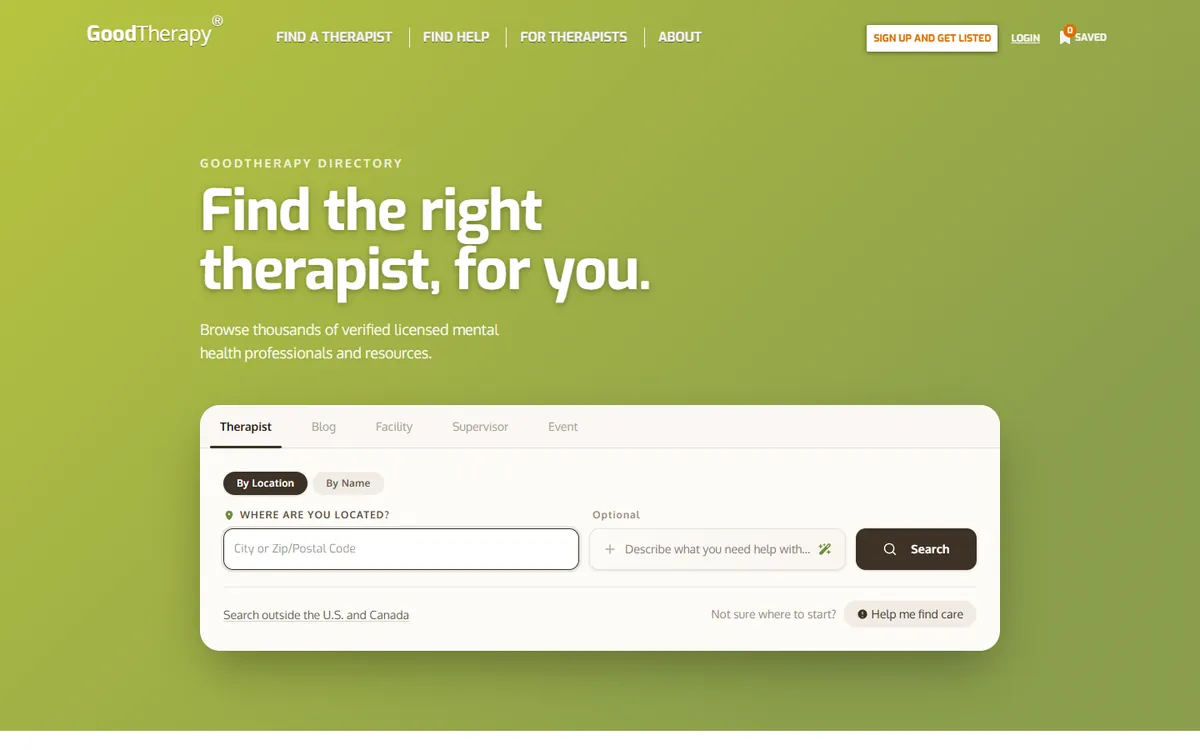
Cost: Basic $30.95/month, Premium $40.95/month (adds unlimited CE credits), Pro $49.95/month (adds practice management tools). Newer practices may qualify for a reduced rate.
GoodTherapy has a long history and a large library of articles for the public. It usually produces fewer inquiries than Psychology Today, but the Premium tier can make sense if you already pay for continuing education elsewhere.
TherapyDen
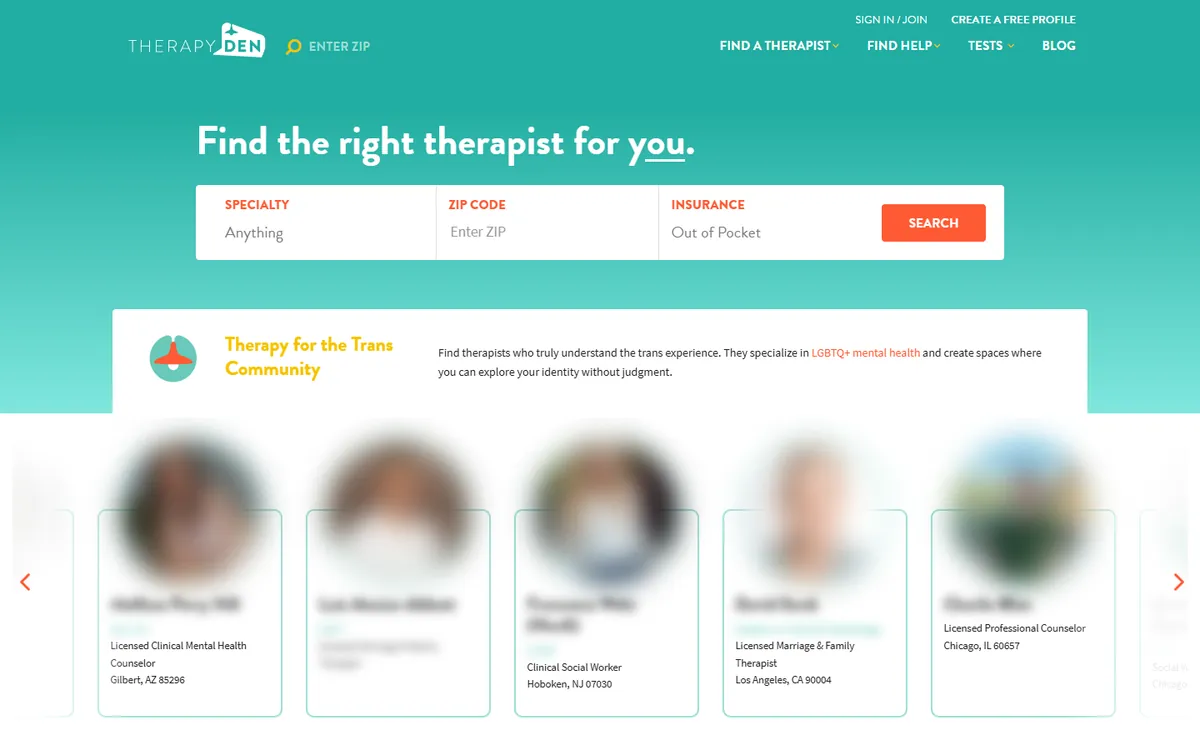
Cost: Free profile, or $30/month for Premium.
TherapyDen offers detailed filters and a clean, modern profile. Be aware that free profiles are not included in TherapyDen’s search results and can list only one state for online counseling, so the free tier is mainly useful as an extra web presence. Premium is a reasonable low-cost second directory.
Zencare

Cost: Reported at $59/month, or $69/month in New York and California, plus a one-time setup fee that has been reported at $80 to $130 and has included professional photos or video.
Zencare vets therapists and presents them with polished profiles and intro videos. It is strongest in larger metro areas where it has built an audience. It costs more than most, so it should be measured carefully.
Psychology.com and Mental Health Match
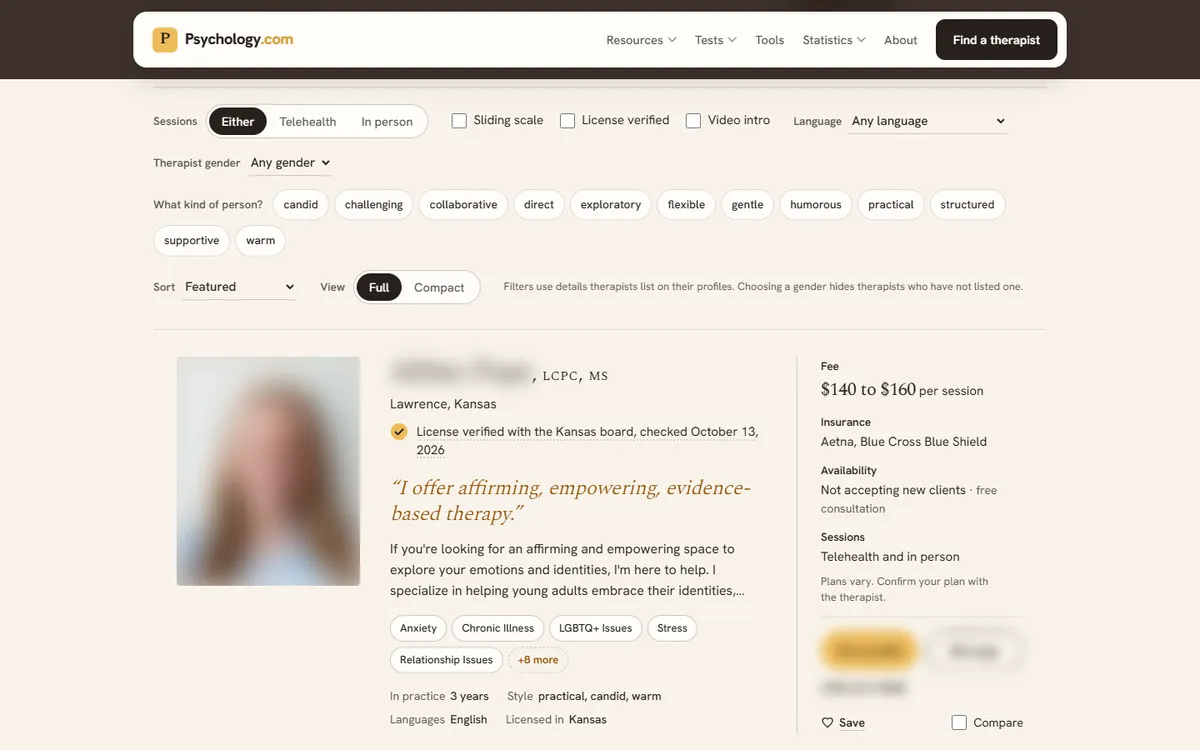

Psychology.com offers a 30-day free trial, then $49/month or $490/year. Mental Health Match matches clients through a short questionnaire and offers a free trial before a monthly or annual fee.
Both are newer than Psychology Today. They can be worth testing during the free trial period, but only keep them if they produce inquiries you can trace.
Free Listings Every Eligible Practice Should Claim
These cost nothing and support how your practice appears in local search:
- Google Business Profile: the most important free listing for practices that see clients in person. Online-only practices are not eligible. Our Google Business Profile guide for therapists covers eligibility, setup, and reviews.
- Bing Places and Apple Business: free, and they feed Bing, Microsoft Copilot, Apple Maps, and Siri.
- Healthgrades: claim your free basic profile so your information is accurate.
- Yelp: claim the page if one exists for your practice, even if you never advertise there.
- TherapyDen’s free profile: limited, but free.
Make sure your practice name, address, phone number, and website are identical everywhere. Conflicting details create confusion for both clients and search engines.
Identity-Focused and Community Directories
For therapists who serve a specific community, a focused directory often produces fewer but much better-matched inquiries than a general one.

- Inclusive Therapists: for therapists of color and LGBTQIA+ affirming clinicians. $29/month, or $22/month billed annually, with a 90-day free trial. Group plans are available.
- Therapy for Black Girls: connects Black women with therapists. Listings are $25/month or $300/year, and searching is free for clients.
- Other community directories include Therapy for Black Men, Latinx Therapy, Asian Mental Health Collective, South Asian Therapists, and the National Queer & Trans Therapists of Color Network. Pricing and eligibility vary, so check each site’s current join page.
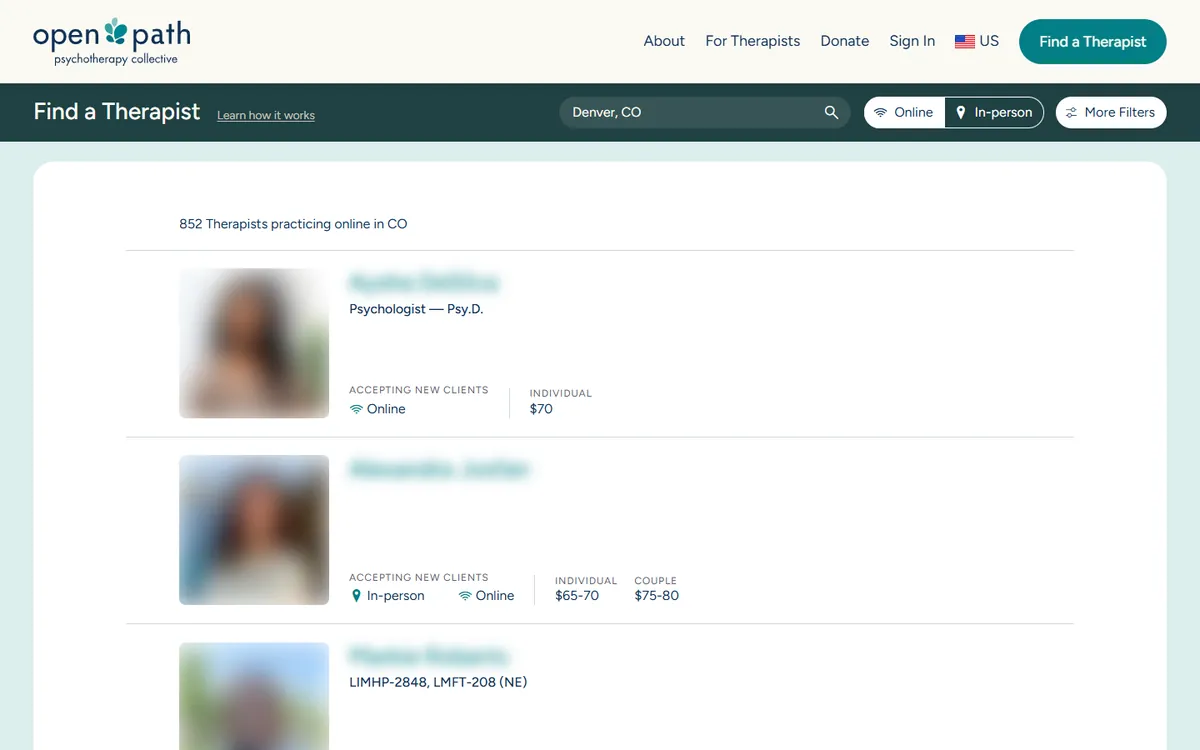
- Open Path Collective: no listing fee, but you agree to offer reduced-fee sessions to its members. Useful for filling open slots, especially for newer clinicians.
Only list in a community directory if you genuinely serve that community well. Clients who search these directories are looking for real experience and understanding, and a mismatched profile helps no one.
Specialty and Professional Association Directories
If you have specialized training, the referral directory attached to it is often the best-targeted listing you can have, because the people searching it already know what they want.
- Gottman Referral Network: $50/month for Level 2 or 3 trained therapists, or $30/month for Gottman Certified Therapists.
- EMDRIA Find an EMDR Therapist: a benefit of full EMDRIA membership.
- APA Psychologist Locator: available to eligible APA members. Membership dues apply.
- AAMFT TherapistLocator: managed through your AAMFT member account. Eligibility depends on membership category.
- Specialty organizations such as Postpartum Support International, the International OCD Foundation, and the Anxiety and Depression Association of America also maintain provider directories for members or trained clinicians.
Because you may already pay these membership dues, these listings often cost nothing extra. Check that your profile is complete.
Insurance Platforms That Include a Directory
A newer group of companies handles insurance credentialing and billing for therapists and lists them in a client-facing directory at the same time.
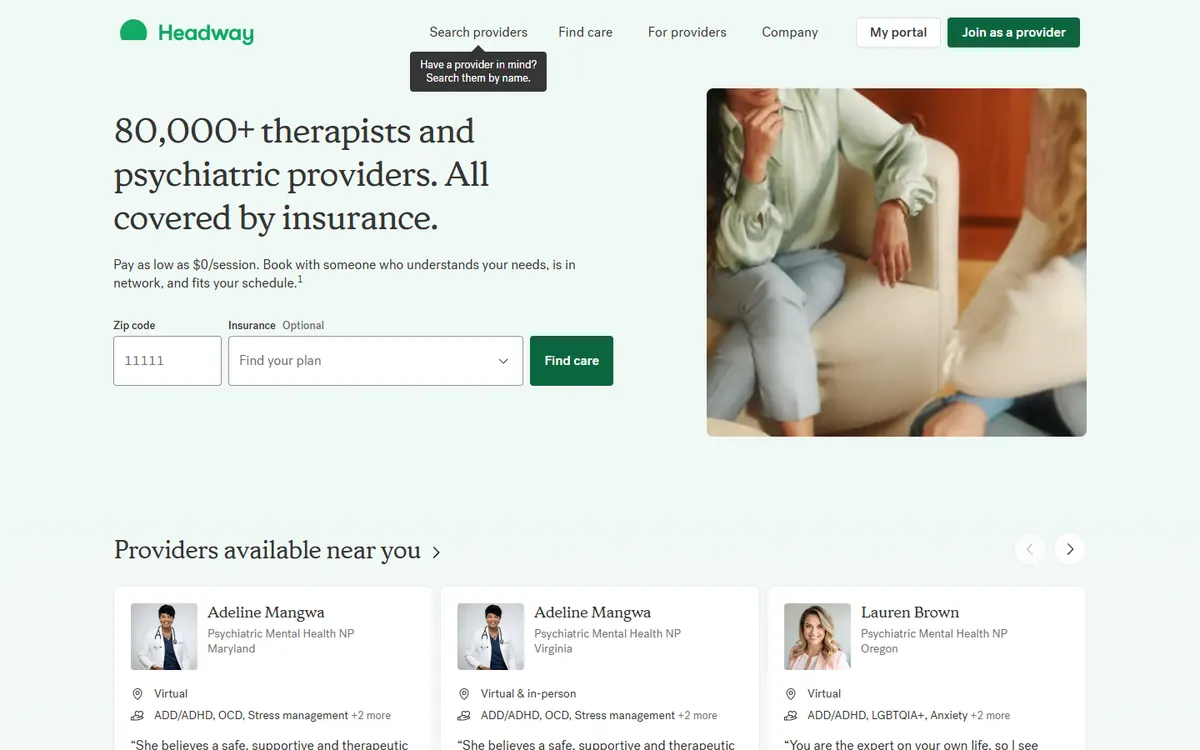
- Headway and Grow Therapy: free for therapists to join. They credential you with insurance plans and send insurance-paying clients through their own directories.
- Rula: also free to join, credentialing therapists under its group contracts.
- Alma: $95/month, which includes insurance program participation. You keep your cash-pay income.
- SimplePractice Therapy Finder (formerly Monarch): included with any SimplePractice plan, so you may already have a profile available.
These can fill a caseload quickly for therapists who want to take insurance. Read the terms carefully, especially around reimbursement rates, who controls the client relationship, and what happens to your directory profiles if you leave the platform.
Pay-Per-Booking: Zocdoc
Zocdoc works differently. Instead of a flat monthly fee, providers pay when a new client books through the platform. Pricing is quoted individually by specialty and location, and published examples have ranged from roughly $35 to over $100 per booking. Some bookings that cancel late or no-show can still be charged.
Zocdoc can make sense for insurance-based practices in competitive cities. For most private-pay therapists, it is an expensive way to acquire clients compared with a flat-fee directory.
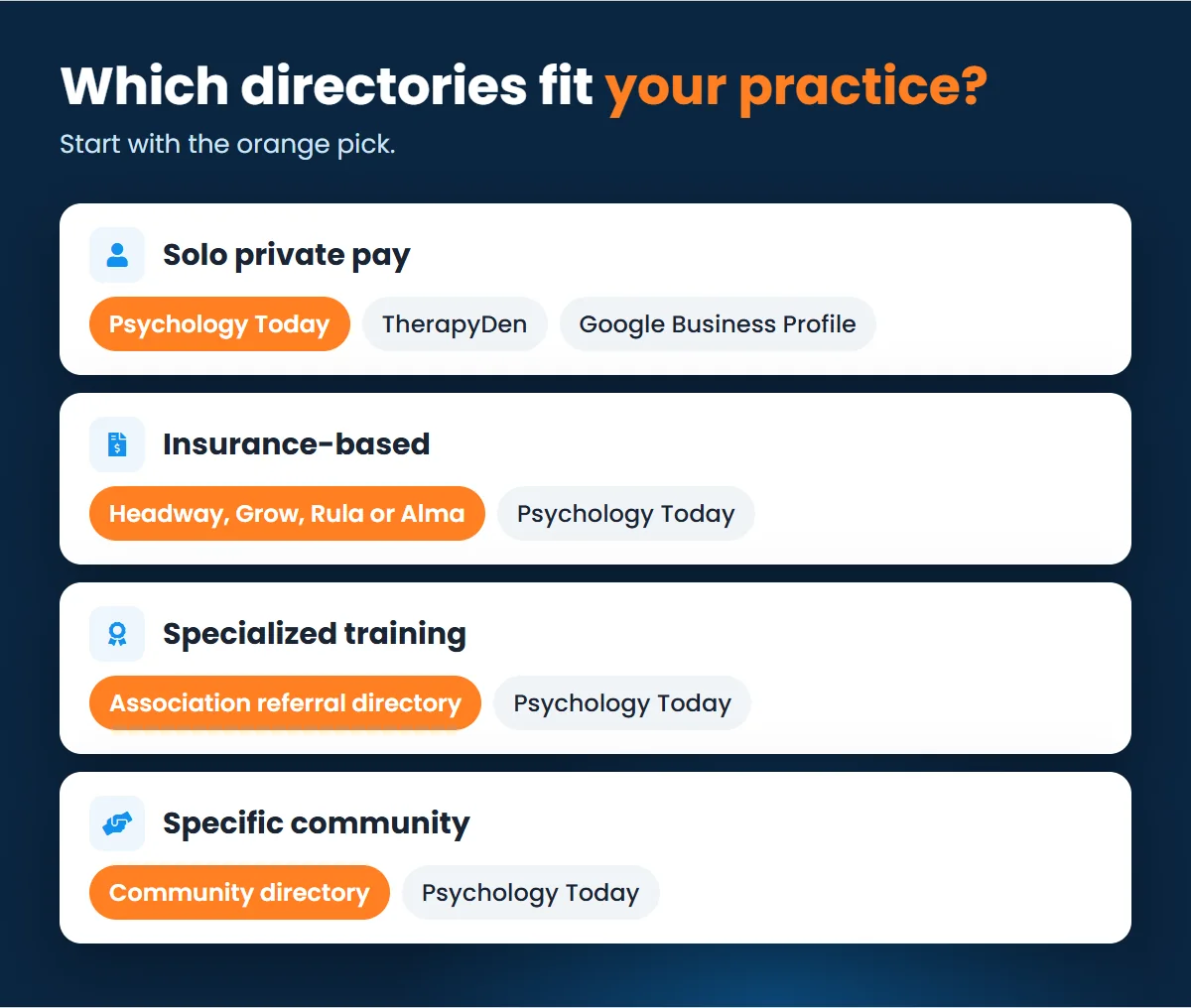
Which Therapist Directories Are Worth Paying For?
It depends on the type of practice you run.
Solo private-pay practice
Psychology Today, a free TherapyDen profile, and a complete Google Business Profile are usually enough. Add one specialty or community directory if it matches your clients. Put the rest of your budget into your own website and local SEO, which keep working without a monthly listing fee.
Insurance-based practice
An insurance platform may bring more clients than any directory. Keep Psychology Today, and use the insurance filters on every profile so the right clients can find you.
Specialized practice
Prioritize your professional association’s referral directory, then Psychology Today. Make your specialty unmistakable in the first lines of every profile.
Group practice
List each clinician individually where the directory allows it, and make sure every profile sends inquiries to the same well-staffed intake process. Review results per clinician and per directory every quarter.
How to Tell Whether a Directory Is Worth the Money
A directory is worth paying for if it brings in clients at a cost you are comfortable with. The math is simple.
A Psychology Today listing costs about $360 a year. If it brings you even one client who attends ten sessions at $150, it has paid for itself several times over. If it has not produced a single consultation in six months, it is not working, no matter how many profile views it reports.
To know which directory a client came from:
- Ask every new inquiry how they found you, and record the answer.
- Where the directory allows it, link your profile to your website with a tracking parameter so the visits show up in your analytics.
- Consider a separate call-tracking number on a directory profile, keeping your main number consistent on Google and your website.
- Review the numbers every three months: inquiries, consultations, and new clients per directory.
How to Write a Directory Profile That Gets Contacted
Most therapist profiles read the same way: years of experience, a list of modalities, and “I provide a safe space.” Clients scrolling through dozens of profiles skip these quickly.
A stronger profile:
- Opens with the client, not your credentials. Describe what they are struggling with in their own words before you describe yourself.
- Names who you help. “Adults with anxiety and perfectionism” is more useful than “individuals of all ages.”
- Explains what working with you is like in plain language, not a list of acronyms.
- Uses a recent, warm, professional photo where your face is clearly visible.
- States practical details clearly: fees, insurance, availability, and whether you offer in-person or online sessions.
- Ends with a clear next step, such as booking a free consultation.
- Links to your website, where clients can learn more and contact you directly.
Update your profile when your availability changes. Some directories also favor recently updated profiles.
Do Not Let Directories Be Your Only Source of Clients
Directories are useful, but they rent you visibility on a platform you do not control. Prices rise, algorithms change, and the same page lists every competitor in your area.
The practices with the most stable caseloads combine a few directories with assets they own: a website that turns visitors into consultations, local SEO, a strong Google Business Profile, and, when they need clients quickly, Google Ads. Our private practice marketing plan template shows how these pieces fit together.
If you are paying for several directories and are not sure what is actually producing clients, schedule a free strategy session. We will look at where your inquiries come from and what is worth keeping.
Frequently Asked Questions
What is the best therapist directory in 2026?
For most US private practices, Psychology Today is still the most effective single directory because of its search visibility and client traffic. The best second directory depends on your practice: an identity-focused directory, your specialty association’s referral network, or an insurance platform.
How much does Psychology Today cost for therapists?
A standard Psychology Today listing costs $29.95 per month, about $360 per year. You can earn a free month by referring a colleague who joins.
Are there free therapist directories?
Yes. TherapyDen offers a free profile, though it is not included in its search results. Google Business Profile, Bing Places, Apple Business, and Healthgrades are free. Open Path Collective has no listing fee but requires you to offer reduced-fee sessions. Headway, Grow Therapy, and Rula are free to join for insurance-based therapists.
How many directories should a therapist be on?
Usually two to four. Quality and tracking matter more than quantity. It is better to have one excellent, well-written profile on the right directory than six generic ones you never check.
Are therapist directories worth it?
A directory is worth it when it produces clients at a reasonable cost. Track how each client found you. If a paid directory has not produced a consultation in six months, cancel it and put the money into something that does.
Can a directory replace a website?
No. A directory profile helps people discover you, but most clients still look for your website before they reach out. Your own website is also the only place where you control the message, the design, and how clients contact you.
Pricing sources: each directory’s own join or pricing page where available, plus independent 2026 reviews. Prices last checked November 2026.