


One of the first things therapists tell me when we start working together is:
“I want more private-pay clients.”
It comes up constantly.
Most therapists I speak with are not happy with insurance reimbursement. There are exceptions, and some insurance panels pay reasonably well, but many therapists eventually reach the same point.
They want more control over their fees.
They want fewer administrative headaches.
They want to stop depending so heavily on insurance.
And eventually they start thinking:
“How do I transition to private pay?”
The problem is that private pay is a completely different game.
If you accept insurance, the insurance company itself gives the client a reason to choose you.
You’re in-network.
Their cost is lower.
You appear in their directory.
That alone can generate demand.
With private pay, that advantage disappears.
Now the potential client may be comparing you with someone who costs them significantly less through insurance.
So you need to give them a reason to choose you.
That means better positioning, stronger marketing, a better website, a clear specialty, and a much stronger consultation and intake process.
Before dropping insurance panels, I would make sure those pieces are already in place.
Here are the seven areas I would focus on first.
1. Do Not Switch to Private Pay Before Your Marketing Is Ready
One of the biggest mistakes you can make is dropping insurance first and figuring out how to attract private-pay clients afterward.
That creates unnecessary pressure.
You suddenly have openings, fewer referrals, and a marketing system that has never been tested.
I would rather see a therapist build private-pay demand before making a major transition.
Ask yourself:
- Do I have a professional website?
- Do people find me on Google?
- Do I specialize in anything people actively search for?
- Does my website clearly explain why someone would choose me?
- Am I consistently receiving inquiries?
- Do I know where those inquiries are coming from?
- Can I convert inquiries into consultations?
If the answer to most of those questions is no, I would work on those things first.
You want to transition from a position of strength, not from a position where you desperately need every new inquiry to become a client.
If you’re considering moving toward private pay and aren’t sure whether your current marketing is ready, schedule a free 30-minute strategy session with me. I can take a look at your website, Google presence, specialty, and current lead flow and tell you where I think the biggest gaps are.

3. Specialize in a Few Things
Private-pay marketing becomes much easier when you are known for something.
If your website says:
- anxiety
- depression
- trauma
- couples
- children
- teens
- adults
- stress
- grief
- life transitions
- relationships
you may technically serve more people.
But you also look similar to thousands of other therapists.
Private-pay clients often search more specifically.
They may search for:
- EMDR therapist
- IFS therapist
- trauma specialist
- couples therapist
- OCD therapist
- therapist for high-functioning anxiety
- therapist for infidelity
- therapist for postpartum anxiety
Services like EMDR and IFS can work particularly well for private-pay marketing because people sometimes search for the modality itself.
That gives you a much clearer marketing opportunity.
Someone specifically searching for an EMDR therapist already knows something about what they want.
The same principle applies beyond modalities.
You can specialize around a population or problem.
For example:
Therapy for high-achieving professionals struggling with anxiety and burnout
is much more memorable than:
Therapy for adults experiencing anxiety, depression, and stress.
You do not need to only treat one thing.
But your marketing should give people a clear reason to remember you.

5. Give People a Chance to Get to Know You
Private-pay clients are buying more than a therapy session.
They are making a decision about you.
That makes familiarity incredibly valuable.
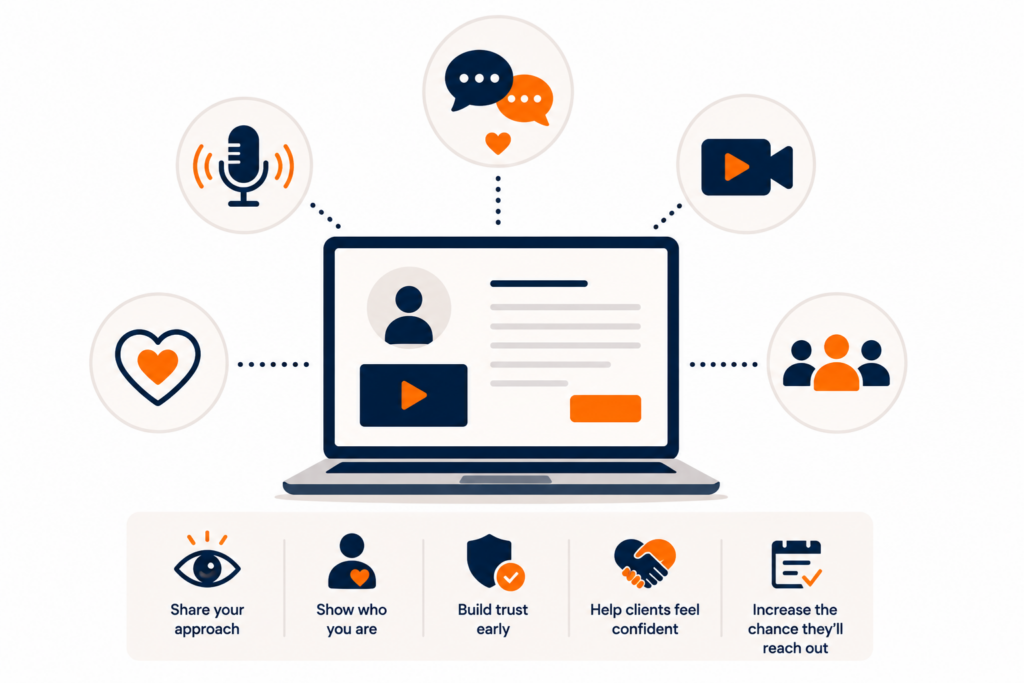
One of the easiest ways to create that familiarity is a short video introduction on your website.
It does not need to be professionally produced.
You do not need dramatic lighting or a studio.
Just introduce yourself.
Explain:
- who you work with
- what kinds of problems you specialize in
- what your approach is like
- what someone can expect when working with you
A person can learn a lot from hearing you speak for 60 or 90 seconds.
Podcasts can help for the same reason.
If you’ve been interviewed on a podcast, spoken at an event, appeared on a webinar, or created useful content elsewhere, put it on your website.
It builds familiarity before the consultation even happens.
By the time someone contacts you, they may already feel like they know you.
That is particularly powerful when you’re asking someone to pay privately.
7. Build a Predictable Source of Private-Pay Leads
Finally, you need a way to consistently get in front of potential clients.
You cannot build a private-pay practice around hoping someone refers you.
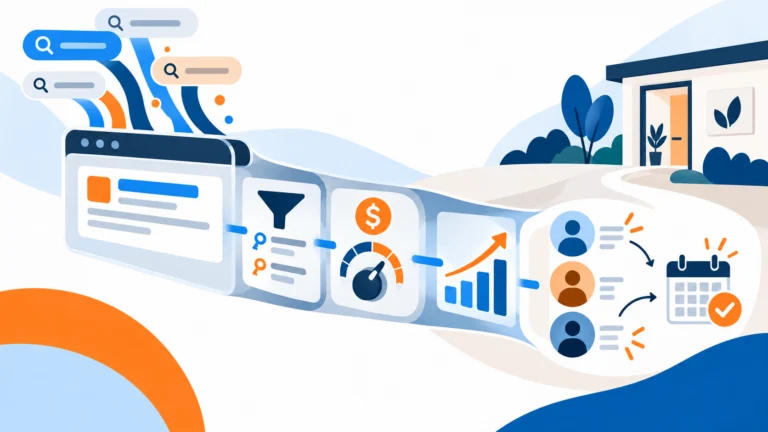
For many of the practices we work with, Google becomes an important part of that system.
Someone searching:
“EMDR therapist near me”
“couples therapist [city]”
“anxiety therapist near me”
or:
“trauma therapist [city]”
is already looking for help.
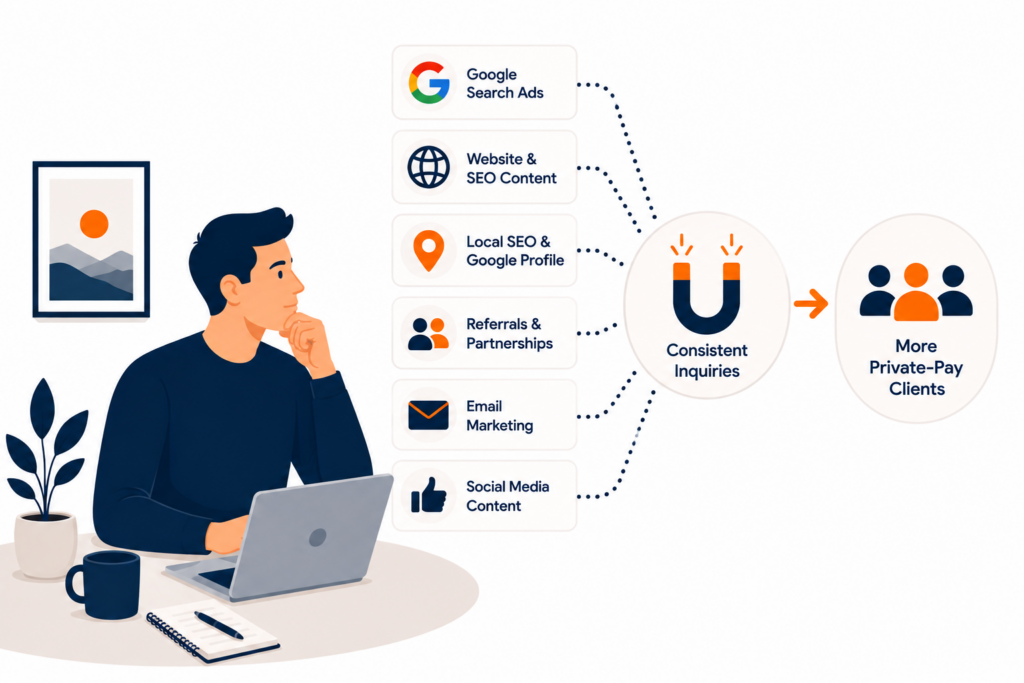
You can reach those people through:
- Google Ads
- SEO
- Google Business Profile
- specialty service pages
- local landing pages
- referral relationships
The specific mix depends on your practice and market.
But you should eventually be able to answer:
“Where are my next five private-pay clients likely to come from?”
If the answer is:
“Hopefully referrals.”
you do not have a predictable acquisition system yet.
You can learn more about our Google Ads management services, or if you’d rather figure out whether Google Ads even makes sense in your market first, schedule a free 30-minute strategy session.
I can look at your location, specialty, competitors, website, and current marketing and help you determine what I would prioritize.